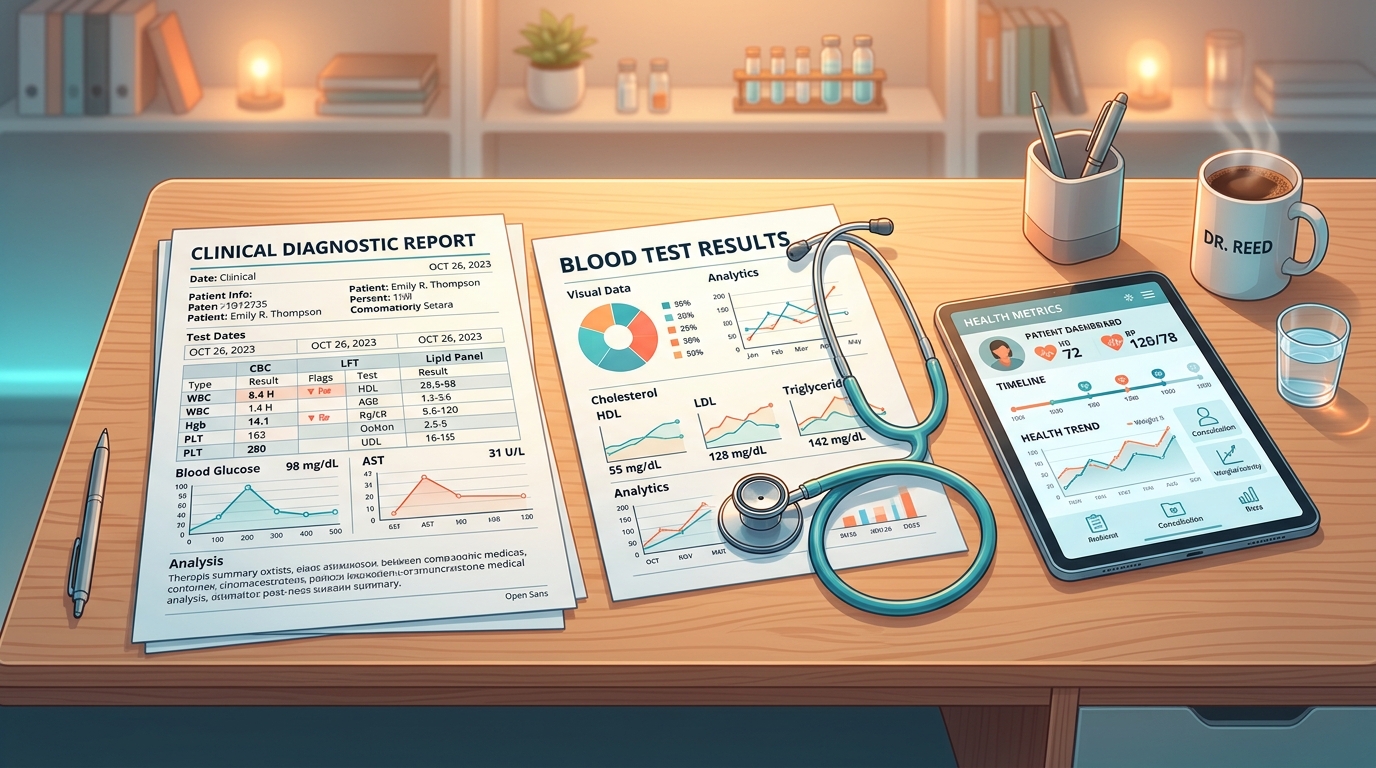
Most people only think about their medical reports right before walking into a doctor's consultation clinic. In the rush, papers get shuffled, critical pages are left behind at home, and doctors are left piecing together a medical puzzle with half the pieces missing.
Managing medical documentation properly is an essential life skill. Here are the seven most common mistakes individuals and families make, along with practical ways to rectify them.
1. Discarding or Ignoring 'Normal' Test Results
Many people throw away or fail to archive blood work and diagnostic reports simply because the doctor remarked that 'everything looks normal.'
However, normal test results establish your personal physiological baseline. A creatinine level of 0.8 mg/dL that moves to 1.1 mg/dL over two years is still within the statistical reference range, but the upward trend can be an early alert of kidney stress. Without your previous normal report, your clinician cannot detect this shift.
2. Relying on WhatsApp Photos and Camera Rolls
Snapping a quick photo of a prescription or ultrasound report and leaving it in your phone's photo gallery or WhatsApp chat with a sibling is dangerous. Compressed WhatsApp images blur crucial dosage decimals (e.g., confusing 0.25mg with 25mg) and become buried under thousands of personal photos.
3. Keeping the Scan Film but Losing the Radiologist's Impression
Patients frequently carry bulky MRI or CT scan films to clinics while having misplaced the typed 1-page radiologist interpretation report. The typed formal report provides the official clinical assessment, measurement comparisons, and specialist impression needed by consulting surgeons.
4. Storing Everyone's Records in One Shared Folder
In many Indian households, a single large briefcase or plastic envelope holds medical slips for grandparents, parents, and children together. When an emergency happens, sorting through 15 years of intermingled papers creates life-threatening delays.
5. Neglecting Hospital Discharge Summaries
A hospital discharge summary is the most comprehensive clinical document you will ever receive. It details the admission diagnosis, inpatient interventions, surgical notes, drug regimens, and follow-up directives. Losing a discharge summary leaves future physicians unaware of vital past procedures.
6. Tossing Out Discontinued Prescriptions
When a doctor switches your antihypertensive or diabetes medication, you might be tempted to toss out the old prescription. However, keeping records of discontinued medications helps subsequent doctors understand drug intolerance, ineffective dosages, and previous side-effect profiles.
7. Handing Doctors an Unsorted Heap of Documents
Physicians in outpatient departments have limited time per consultation. Handing them an unsorted stack of 40 loose papers wastes valuable consultation minutes. Chronologically ordered or digitally categorized records allow clinicians to focus on your diagnosis and care plan.
- Personal Health Records: Empowering Patients & Clinical Safety →(PubMed Central (NCBI))
- Ayushman Bharat Health Account (ABHA) & Digital Health Architecture →(National Health Authority, Govt. of India)
- Diagnostic Safety: The Importance of Historical Laboratory Continuity →(World Health Organization (WHO))