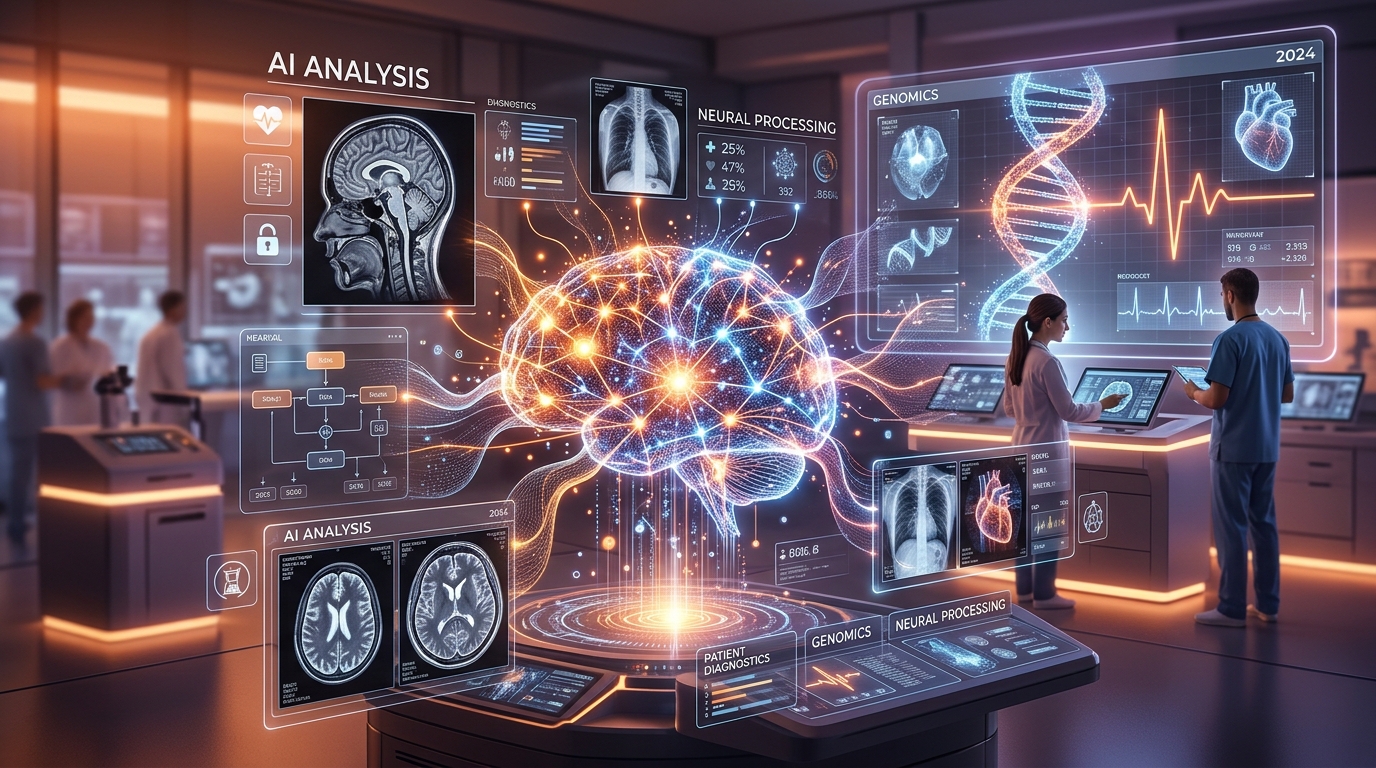
Artificial intelligence in medicine is no longer a futuristic concept from science fiction. Across hospitals, diagnostic centres, and patient health applications worldwide, AI algorithms are actively assisting clinicians in detecting illnesses earlier, reducing administrative burn-out, and deciphering complex medical records.
Crucially, the goal of modern healthcare AI is not to replace human doctors, but to equip clinicians with superhuman pattern recognition tools and liberate them from administrative overload so they can focus on compassionate care.
1. Precision Diagnostic Imaging in Radiology
Deep learning neural networks trained on millions of annotated chest X-rays, mammograms, and retinal fundus photographs can detect micro-abnormalities that might escape human fatigue at the end of a 12-hour hospital shift.
In India, AI-powered chest X-ray screening models deployed across rural primary health centres (PHCs) are detecting early signs of tuberculosis in under 60 seconds, expediting treatment pathways in under-served regions where specialist radiologists are scarce.
2. Intelligent Record Structuring & Document Extraction
One of the greatest burdens on modern medicine is unstructured paperwork. Optical Character Recognition (OCR) combined with Large Language Models (LLMs) can now ingest messy handwritten prescriptions, lab sheets, and multi-page discharge summaries, extracting key parameters into clean, structured digital timelines.
When a doctor reviews a patient with 15 years of diabetes history, AI tools can instantly surface pertinent data: 'Patient experienced allergic urticaria to Amoxicillin in 2021; HbA1c improved from 8.9% to 6.8% under Metformin.'
3. Longitudinal Risk Prediction Before Acute Illness
Traditional diagnostics are reactive: you feel unwell, you visit a clinic, tests confirm disease. AI shifts this paradigm toward proactive prevention by identifying subtle multivariate correlations across longitudinal health markers.
A patient whose systolic pressure gradually climbs 3 mmHg per year, paired with subtle shifts in resting heart rate and fasting triglycerides, can be flagged for cardiovascular risk years before an acute arterial blockage occurs.
- Ethics and Governance of Artificial Intelligence for Health →(World Health Organization (WHO))
- National Strategy for Artificial Intelligence in India: Discussion Paper →(NITI Aayog & IndiaAI)
- AI in Clinical Diagnostics & Imaging: Research Overview →(PubMed Central (NCBI))