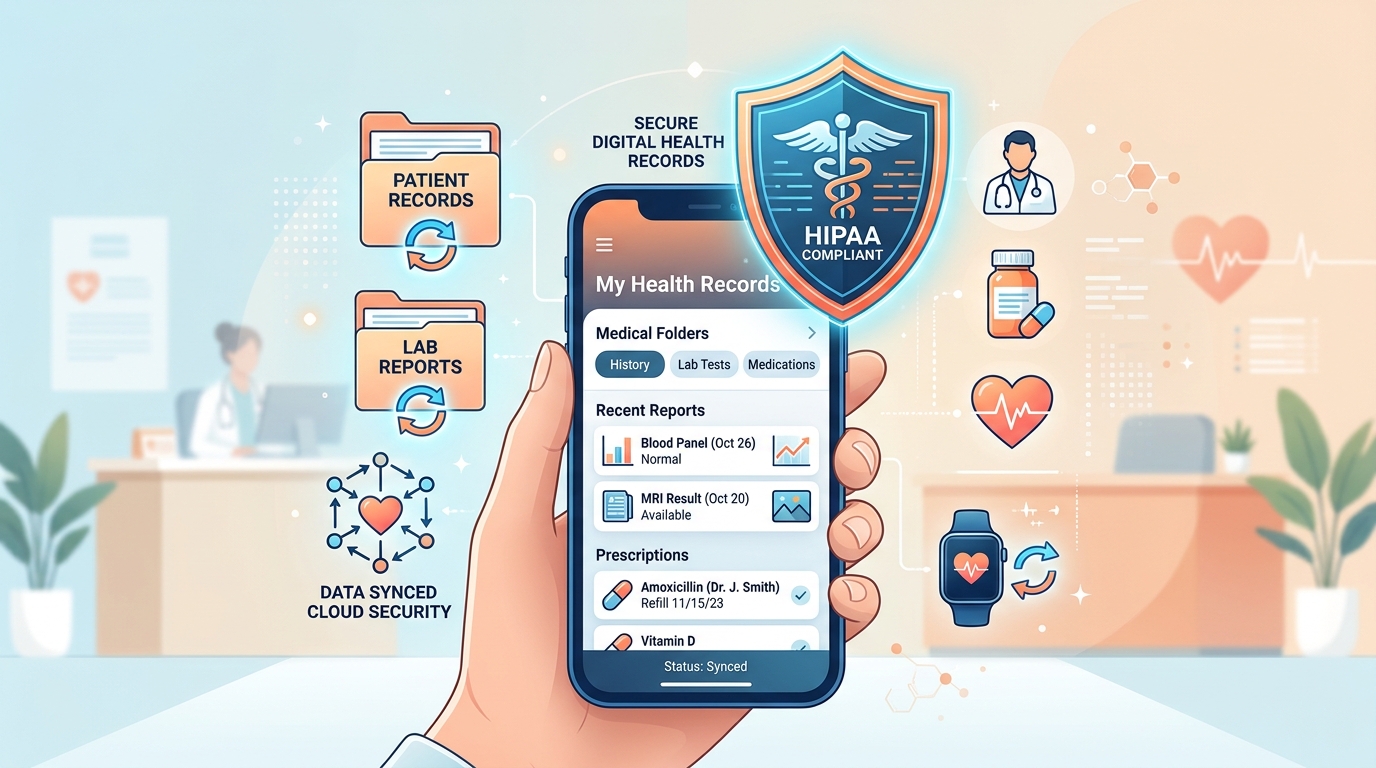
India's healthcare sector is undergoing a monumental transformation. Just as Unified Payments Interface (UPI) revolutionized retail banking and digital payments across the country, the Ayushman Bharat Digital Mission (ABDM) is architecting an interoperable digital highway for health records.
For Indian families who have historically wrestled with water-damaged paper files and missing prescriptions, understanding how digital health records work in India is the key to unlocking seamless, portable medical care.
What Is ABDM and the ABHA Health ID?
The Ayushman Bharat Digital Mission is spearheaded by the National Health Authority (NHA), under the Ministry of Health and Family Welfare. The cornerstone of this ecosystem is the Ayushman Bharat Health Account (ABHA):
- 14-Digit Unique ABHA Number: A unique national health identifier that bridges your clinical identity across verified hospitals, private diagnostic laboratories, and digital clinics nationwide.
- ABHA Address (PHR Handle): Similar to a UPI ID (e.g., yourname@abdm), an ABHA address allows you to digitally authorize the transfer of diagnostic reports and discharge summaries into your chosen Personal Health Records (PHR) app.
- Consent-Based Data Sharing: No hospital or clinician can access your records without your explicit, OTP-authenticated digital consent. You can grant time-limited access and revoke it anytime.
Why Interoperability Is a Game Changer for Families
Before ABDM, every hospital and diagnostic chain was an isolated island. A blood test taken at a major lab chain could not be easily viewed by a local specialist in another city without physical printouts.
With unified health records, when a patient travels from Jaipur to AIIMS Delhi or a tertiary hospital in Chennai, the treating doctor can view past imaging reports, allergies, and surgical histories with patient consent in minutes, bypassing days of duplicated tests.
Data Privacy & Legal Protections in India
Patient privacy is legally reinforced under the Digital Personal Data Protection Act (DPDP Act 2023) and ABDM Health Data Management Policy:
- Decentralised Storage: Your health data is not stored in a single monolithic government database. Instead, documents remain encrypted at their point of creation (the lab or hospital) and are federated upon your explicit consent.
- End-to-End Encryption: Medical records transmitted across the network use industry-standard encryption, preventing interception by unauthorized intermediaries.
- Right to Correction & Erasure: Citizens retain statutory rights to correct inaccurate data and manage their records autonomously.
- Global Overview of Digital Health & Health Data Standards →(World Health Organization (WHO))
- Create Ayushman Bharat Health Account (ABHA Number) →(National Health Authority, Govt. of India)
- The Digital Personal Data Protection Act, 2023 →(Ministry of Electronics and Information Technology (MeitY))