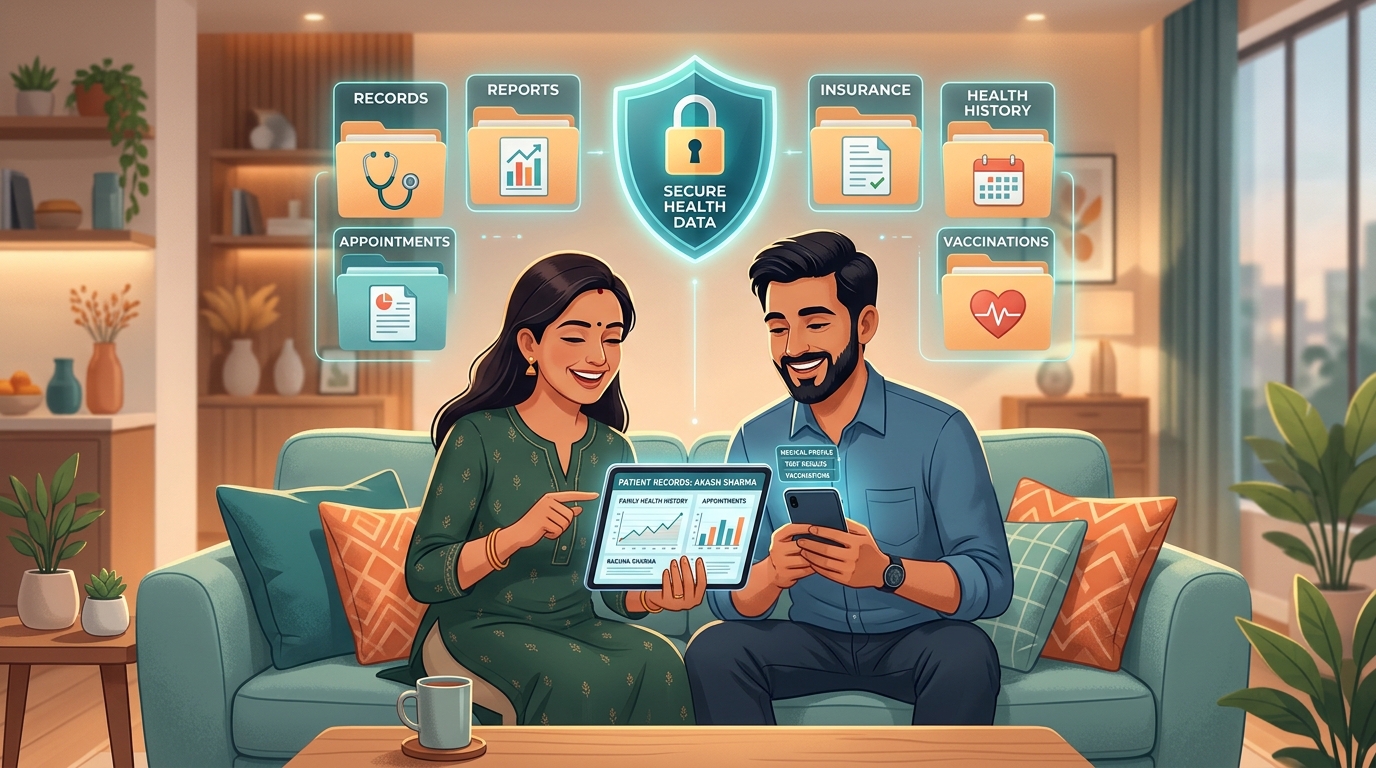
When a health crisis strikes, the last thing anyone should be doing is hunting through cupboards, WhatsApp chats, or dusty plastic folders for an old discharge summary or ECG strip. Yet across millions of Indian households, medical history remains scattered across physical paper slips, unlabelled envelopes, and fading thermal paper receipts.
Maintaining digital health records is no longer a tech novelty—it is fundamental family safety. Digital records empower doctors to make rapid, informed clinical decisions while ensuring no critical diagnosis or allergy is overlooked.
The Hidden Risks of Relying on Paper Health Records
Paper medical documentation has severe vulnerabilities that directly affect clinical treatment:
- Physical Degradation: Thermal printouts (common for ultrasound scans, ECGs, and hospital bills) fade within 6 to 18 months, rendering critical baseline data completely unreadable.
- Geographical Fragmentation: When elderly parents live in one city and adult children in another, physical files cannot be shared instantaneously when a sudden hospital visit happens.
- Redundant Diagnostic Spending: When past lab results cannot be retrieved during a consultation, physicians are forced to repeat expensive blood work, CT scans, and X-rays.
- Misplaced Drug Allergies: Knowing that a parent had an adverse reaction to a cephalosporin or NSAID 5 years ago can save a life—information easily lost in a displaced paper folder.
Key Benefits of a Unified Digital Family Health Record
Moving to an organised, encrypted digital health repository changes how families interact with healthcare professionals:
- Instant Emergency Retrieval: Critical parameters—blood group, current medications, chronic conditions (diabetes, hypertension, cardiac stents), and allergies—can be shared with an ER team within seconds.
- Longitudinal Health Tracking: Comparing HbA1c levels, lipid profiles, thyroid panels, or kidney function tests across multiple years reveals chronic trends before acute symptoms emerge.
- Seamless Multi-Specialist Consultations: When consulting an oncologist, cardiologist, or endocrinologist, having a chronological timeline ensures zero discrepancy between opinions.
- Zero Storage Clutter: Prescriptions, discharge summaries, vaccine cards, and invoices remain indexed by family member, date, and doctor.
Best Practices to Digitise Your Family's Health Records
Digitisation does not mean hoarding thousands of raw smartphone photos in your gallery. Follow this disciplined framework:
- Separate Profiles per Family Member: Never mix a grandparent's cardiac reports with a child's immunisation log. Every family member needs an independent digital profile.
- Standardised Document Categorisation: Tag documents into clear categories: Blood Reports, Imaging & Scans, Prescriptions, Discharge Summaries, and Vaccination Cards.
- Record the Clinician and Date: Always record the consulting doctor's name, the clinic or hospital, and the exact date of consultation for future reference.
- Keep Emergency Info Offline-Accessible: Ensure core emergency summary points (blood group, allergies, pacemaker status) are always retrievable on your phone even without cellular coverage.
- Ayushman Bharat Digital Mission (ABDM) & ABHA Account Ecosystem →(National Health Authority, Govt. of India)
- Global Strategy on Digital Health (2020–2027) →(World Health Organization (WHO))
- Personal Health Records: Empowering Patients & Reducing Duplication →(PubMed Central (NCBI))